
Why Do Some Countries Drive on the Left?
 EnglishMasteryHub
Article Level: A1-A2
Explanation: Discover why some countries drive on the left while others drive on the right. Explore the history of British road rules, learn how driving traditions spread around the world, and find out why changing sides is not as simple as it seems.
Commonly Used Words from the Article
1. Traffic /ˈtræfɪk/ (noun): Vehicles moving along roads.
There is a lot of traffic in London during the morning.
2. Rule /ruːl/ (noun): An instruction that tells people what they must or must not do.
Every driver must follow the rules of the road.
3. Driver /ˈdraɪvə/ (noun): A person who drives a vehicle.
The bus driver stops at the traffic lights.
4. Junction /ˈdʒʌŋkʃən/ (noun): A place where two or more roads meet.
Turn left at the next junction.
5. Steering wheel /ˈstɪərɪŋ wiːl/ (noun): The round part of a vehicle that a driver uses to change direction.
In most British cars, the steering wheel is on the right.
Phrasal Verb
-
Switch over /swɪtʃ ˈəʊvə/ : To stop using one system or method and start using another.
On 3 September that year, the country switched over to driving on the right.
Idiom
-
Second nature /ˌsekənd ˈneɪtʃə/ : Something that becomes easy and natural because you have done it many times.
For them, driving on the left is often second nature.
Audio File of the Article
Read more: Why Do Some Countries Drive on the Left?

Why Do Some Countries Drive on the Left?
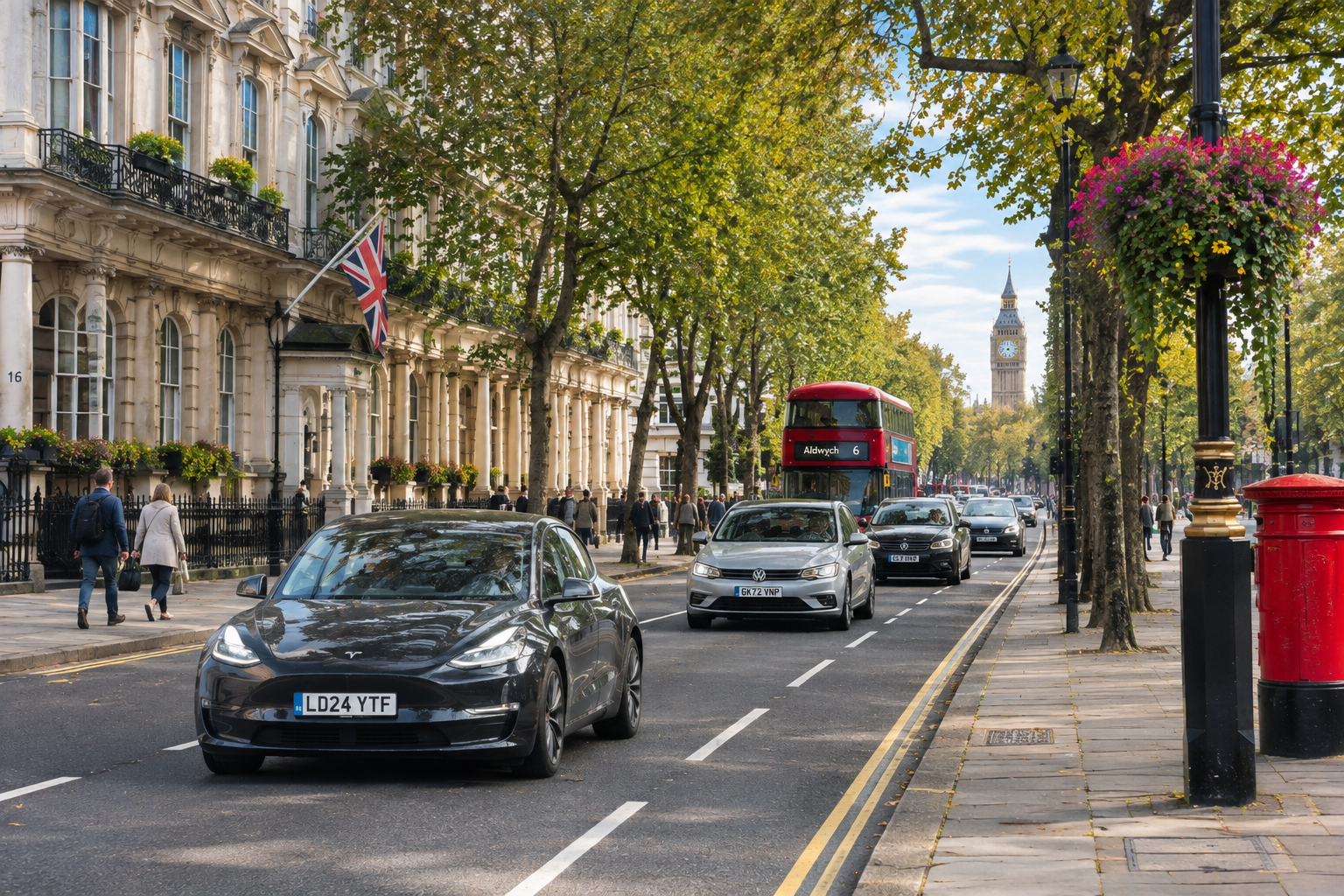
Have you ever watched a video of a busy London street? You may notice something surprising: cars and buses travel on the left side of the road. In Turkey, France and the United States, people drive on the right. Why do countries follow different rules? The answer is part of a long story.
Before Cars Arrived
Long ago, people travelled by horse or in horse-drawn carriages. There were no cars, traffic lights or modern road signs. Many people in Britain already travelled on the left. One popular idea is that keeping left made it easier for riders to use their right hand. However, historians are not sure exactly how the custom began.
As roads became busier, clear rules became important. London Bridge had a rule about keeping left in the 1700s. In 1835, Britain made driving on the left a rule for roads across the country. This helped people know where to go when another vehicle came towards them.
How Did the Rule Travel?
Britain once governed many places around the world. It brought some of its road rules to these places. Today, Australia, India, New Zealand and South Africa still drive on the left.
Japan also drives on the left, but it was not part of the British Empire. Countries can have similar rules for different historical reasons. This shows that there is not just one story behind left-side driving.
What About the Right Side?
Most countries drive on the right. These include Germany, Spain, Italy and the United States. Over time, different places developed different road habits and laws.
Some countries have changed their rules. Sweden is an interesting example. Until 1967, people there drove on the left. On 3 September that year, the country switched over to driving on the right. The government prepared signs and explained the change to drivers. It was a big day for people across Sweden.
Why Not Change Everywhere?
Changing sides is not easy. A country may need new road signs, changes to junctions and a lot of public information. Drivers also need time to learn new habits. It can cost a great deal of money.
In Britain, people have been driving on the left for many generations. The rule is familiar to local drivers. For them, driving on the left is often second nature. This means it feels easy because they are used to it.
There is another difference you may notice. In most British cars, the steering wheel is on the right. In most French cars, it is on the left. This helps drivers see the road ahead when they need to pass another car.
For visitors, these differences can feel strange at first, especially when they cross a busy road.
A Rule to Remember
If you visit another country, always check which side of the road people use. Look carefully before crossing a street, too. The left or right side is not automatically better. What matters most is that everyone understands and follows the same local rules.
So, the next time you see a red London bus travelling on the left, you will know that this everyday sight has a long history.
Grammar Notes
Present Simple
Structure: Subject + base verb (+ -s/-es for he, she, it)
Used to describe facts, habits and general truths.
Example: “Most countries drive on the right.”
Past Simple
Structure: Subject + past form of the verb
Used to describe completed actions and past situations.
Example: “Until 1967, people there drove on the left.”
Present Perfect Continuous
Structure: Subject + have/has + been + verb-ing
Used to describe actions that started in the past and are still continuing.
Example: “In Britain, people have been driving on the left for many generations.”
Tip: Use for with a period of time (for ten years) and since with a starting point (since 2020).
Join Our FREE English Grammar Course and improve your grammar skills!
Five Questions Based on the Article
-
Which side of the road do people drive on in Britain?
-
How did Britain influence road rules in other countries?
-
Which countries mentioned in the article still drive on the left?
-
What happened in Sweden on 3 September 1967?
-
Why is it difficult for a country to change its driving rules?
Join Our Weekly English-speaking Class and improve your speaking skills!
We’d love to hear your thoughts! Join the conversation by leaving a comment below. Sharing your insights, questions, or experiences can help you connect with others in our English learning community. It’s a great way to practice your English skills, engage with like-minded individuals, and improve together. Don’t be shy—jump in and let’s keep the discussion going!