
Halloween: More Than Costumes, Pumpkins and Scary Stories
 EnglishMasteryHub
Article Level: B1-B2
Explanation: Discover the deeper meaning of Halloween beyond costumes and pumpkins. Explore why people enjoy fear, how costumes encourage self-expression, and how this celebration brings communities together while reflecting culture and modern society.
Commonly Used Words from the Article
1. Reveal /rɪˈviːl/ (verb): To make something known or show something that was previously hidden.
People’s reactions to frightening films can reveal a lot about their personalities.
2. Appeal /əˈpiːl/ (noun): The quality that makes something attractive or interesting.
The appeal of Halloween comes from its combination of creativity and excitement.
3. Influence /ˈɪnfluəns/ (verb): To affect the way someone thinks, behaves or makes decisions.
Social media can influence how people choose their Halloween costumes.
4. Belonging /bɪˈlɒŋɪŋ/ (noun): The feeling of being accepted and included in a group or community.
Community celebrations can create a strong sense of belonging.
5. Pressure /ˈpreʃə/ (noun): The feeling that you must do something because of expectations or demands.
Some people feel pressure to buy expensive costumes for Halloween parties.
Phrasal Verb
-
Dress up /dres ʌp/ : To wear special clothes or a costume, particularly for a celebration or event.
Many children dress up as their favourite characters for Halloween.
Idiom
-
Break the ice /breɪk ði aɪs/ : To make people feel more relaxed and comfortable in a social situation, especially when they first meet.
A funny Halloween costume can break the ice and make it easier to start conversations at a party.
Audio File of the Article
Read more: Halloween: More Than Costumes, Pumpkins and Scary Stories

Halloween: More Than Costumes, Pumpkins and Scary Stories
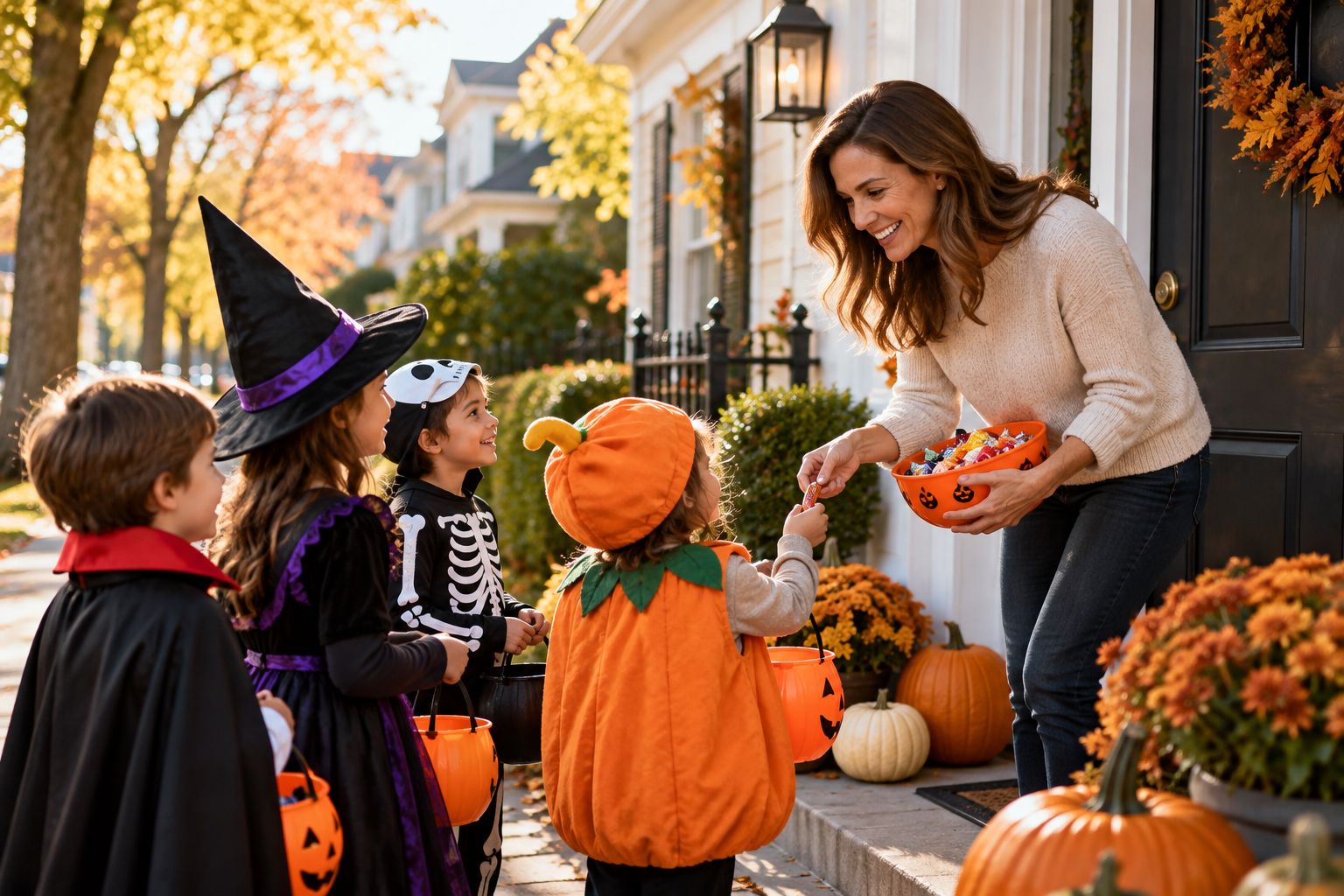
Each October, familiar streets begin to look different. Pumpkins glow in windows, shop displays feature friendly ghosts, and neighbours plan costumes. Halloween is easy to recognise, but it is not simply a night of sweets and scary stories. It also reveals how people deal with fear, express themselves and build connections.
Why Does Fear Sometimes Feel Fun?
Most people avoid danger in everyday life, yet many enjoy frightening films, ghost stories and haunted attractions. The difference is control. When we watch a scary film at home, we know we can switch it off. Our hearts may beat faster, but we usually understand that we are safe.
This mixture of excitement and security helps explain Halloween’s appeal. People experience strong emotions without facing the risks that normally accompany them. Of course, not everybody enjoys being frightened, and that is part of what makes our reactions interesting.
What Can a Costume Change?
On Halloween, people dress up as film characters, animals, superheroes or imaginary creatures. A costume can be funny, impressive or completely unexpected. But clothing does more than change someone’s appearance: it can influence how they behave.
A quiet student might suddenly feel brave enough to join a conversation, while an adult may enjoy being playful for an evening. Wearing a costume does not create a new personality. Instead, it can offer a comfortable way to explore a different side of ourselves.
How Does Halloween Bring People Together?
Halloween can also turn ordinary neighbourhoods into lively social spaces. Families carve pumpkins, friends organise gatherings, and some neighbours welcome children who are collecting treats. Even a simple comment about an unusual costume can break the ice between strangers.
These moments matter because communities are built through small interactions. People do not need an expensive party to feel included. A shared activity, a friendly conversation or a decorated doorway can help create a sense of belonging.
Does Halloween Mean the Same Thing to Everyone?
Not at all. Some people love planning costumes months in advance. Others prefer a quiet evening or choose not to celebrate because of their beliefs or personal tastes. Halloween also looks different across countries and communities, shaped by local customs, films and social media.
Halloween’s roots include older seasonal customs, but modern celebrations reflect the choices and interests of different communities.
Its popularity raises another question: when does a celebration become too commercial? Shops advertise decorations and costumes, while online trends encourage people to create increasingly elaborate displays. For some, this adds excitement. For others, it creates pressure to spend money or take part.
What Remains After the Decorations Come Down?
Perhaps Halloween’s most interesting feature is how it combines opposite feelings: fear and enjoyment, mystery and familiarity, individuality and community. Behind the costumes are ordinary human needs: curiosity, imagination, expression and connection.
The pumpkins eventually disappear, but the questions Halloween raises remain relevant all year. Why do we enjoy safe surprises? When do we feel free to show another side of ourselves? And what helps strangers become neighbours?
Grammar Notes
Present Simple
We use the Present Simple to describe general facts, habits and things that are usually true.
Structure:
-
Affirmative: Subject + base verb (add -s/-es for he, she or it).
-
Negative: Subject + do/does + not + base verb.
-
Question: Do/Does + subject + base verb?
Examples from the article:
-
“Most people avoid danger in everyday life.” — A general fact about human behaviour.
-
“Halloween also looks different across countries and communities.” — A general observation.
-
“People do not need an expensive party to feel included.” — A negative statement.
-
“Why do we enjoy safe surprises?” — A Present Simple question.
Modal Verb: Can
We use can + base verb to express possibility or ability.
Examples from the article:
-
“A costume can be funny, impressive or completely unexpected.”
-
“It can offer a comfortable way to explore a different side of ourselves.”
Here, can describes what is possible rather than what always happens.
Join Our FREE English Grammar Course and improve your grammar skills!
Five Questions Based on the Article
-
Why can frightening experiences be enjoyable when people feel safe?
-
How might wearing a Halloween costume influence someone’s confidence or behaviour?
-
In what ways can Halloween help strengthen relationships within a community?
-
Why do some people choose not to celebrate Halloween?
-
How can commercialisation affect people’s experiences of Halloween?
Join Our Weekly English-speaking Class and improve your speaking skills!
We’d love to hear your thoughts! Join the conversation by leaving a comment below. Sharing your insights, questions, or experiences can help you connect with others in our English learning community. It’s a great way to practice your English skills, engage with like-minded individuals, and improve together. Don’t be shy—jump in and let’s keep the discussion going!