
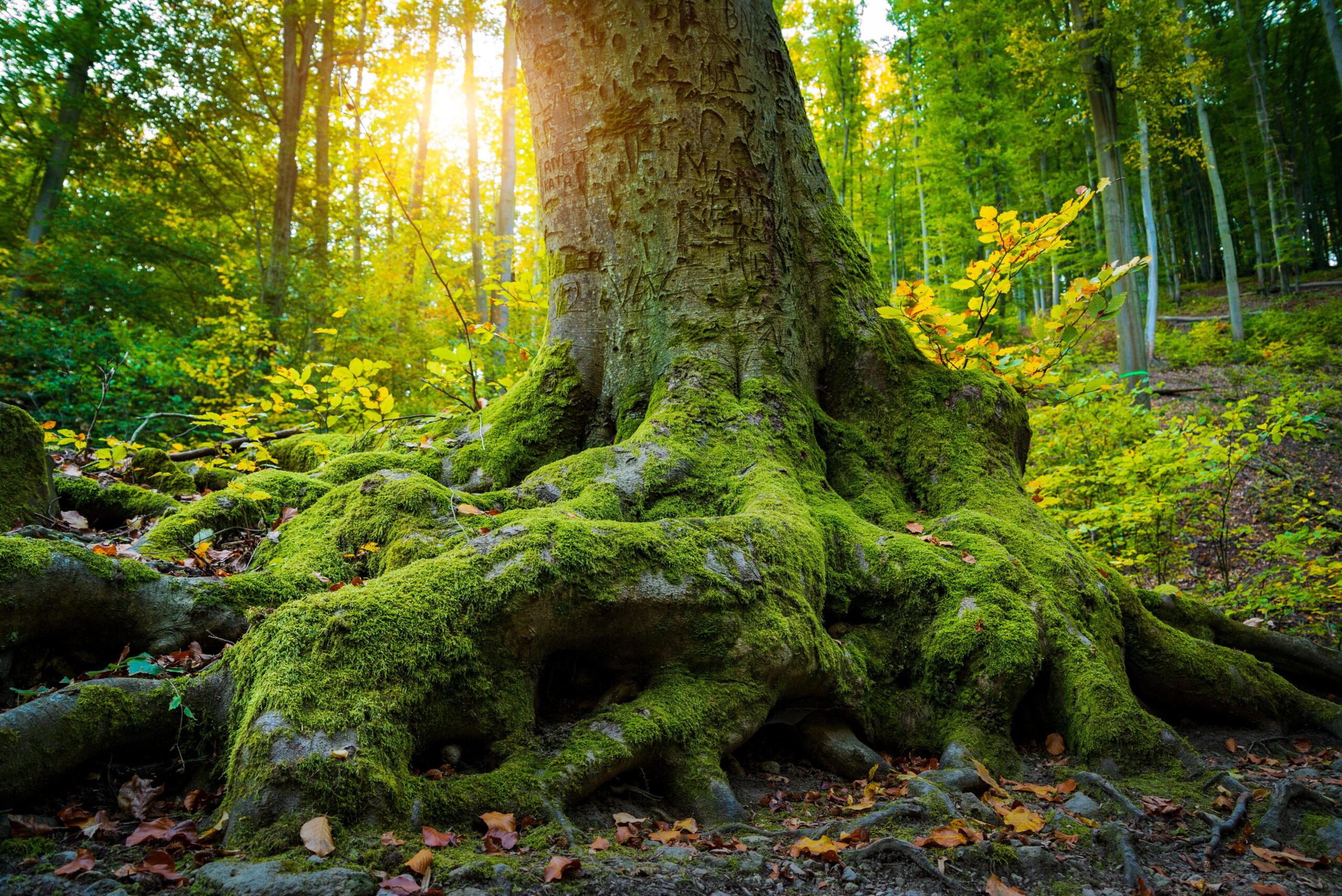
How Trees Communicate Without Making a Sound
 EnglishMasteryHub
Article Level: C1-C2
Explanation: This article explores the fascinating ways trees exchange signals through airborne chemicals, roots and underground fungal networks, revealing how forests function as complex, interconnected ecosystems beneath their seemingly silent appearance.
Commonly Used Words from the Article
1. Tranquil /ˈtræŋkwɪl/ (adjective) : Calm, quiet and peaceful.
The forest appeared tranquil in the early morning.
2. Intricate /ˈɪntrɪkət/ (adjective) : Having many small parts or details arranged in a complicated way.
Scientists are studying the intricate relationships between plants and fungi.
3. Nuanced /ˈnjuːɑːnst/ (adjective) : Showing subtle differences or complexities.
The relationship between trees and fungi requires a more nuanced explanation.
4. Sophisticated /səˈfɪstɪkeɪtɪd/ (adjective) : Highly developed, complex or advanced.
Researchers are using sophisticated equipment to study forests.
5. Transmit /trænzˈmɪt/ (verb) : To send or pass something from one place or organism to another.
Some biological systems can transmit chemical signals.
Phrasal Verb
-
Figure out /ˈfɪɡər aʊt/ : To understand or discover something by thinking, investigating or studying it.
Scientists are trying to figure out how underground fungal networks affect trees.
Idiom
-
There is more than meets the eye /ðeər ɪz mɔː ðən miːts ði aɪ/ : A situation is more complicated or interesting than it initially appears.
A forest may seem completely silent, but there is more than meets the eye.
Audio File of the Article
Read more: How Trees Communicate Without Making a Sound

How Trees Communicate Without Making a Sound
A forest may appear tranquil, but beneath its apparent stillness lies a remarkably dynamic system of interaction. Trees cannot speak or consciously exchange messages, yet they can release chemical signals, respond to neighbouring plants and interact through complex relationships below ground. Scientists are increasingly investigating these processes to understand how forests function as interconnected ecosystems.
One of the most striking forms of plant communication occurs through airborne chemicals. When certain trees are attacked by insects, their leaves can release volatile organic compounds into the surrounding air. Nearby plants may detect these substances and activate defensive responses of their own. Rather than waiting to be damaged, they can alter their chemistry in ways that make their leaves less appealing or more difficult for insects to consume.
An equally intriguing story is unfolding beneath our feet. Tree roots form relationships with mycorrhizal fungi, which extend through the soil as networks of extremely fine threads. Trees provide the fungi with sugars produced through photosynthesis, while the fungi help their hosts obtain nutrients such as phosphorus and nitrogen. In some environments, fungal networks can connect the roots of multiple plants, creating pathways through which nutrients and chemical signals may travel.
These underground connections are sometimes described as the “wood wide web”. The phrase is memorable, but scientists caution against imagining trees as conscious beings deliberately sending messages to their neighbours. The reality is more nuanced. Researchers are still trying to figure out how significant these networks are under natural conditions and whether interactions that appear cooperative always benefit the plants involved.
Communication can also occur without fungal networks. Plants release chemicals from their roots, respond to physical contact and detect changes in light caused by neighbouring vegetation. Some species can even respond differently depending on the environmental conditions around them. Such mechanisms demonstrate that plants are far more responsive to their surroundings than their silent appearance suggests.
Over the coming decades, researchers will be examining these interactions with increasingly sophisticated technology. They will be studying how climate change, drought and habitat destruction influence underground networks, while ecologists will be investigating whether understanding these relationships could improve forest conservation. Future discoveries may challenge some of our current assumptions about how plants interact.
Nevertheless, it is important not to exaggerate what the evidence tells us. Trees do not communicate through language, nor is there evidence that they think about the messages they transmit. In scientific terms, communication simply involves signals produced by one organism influencing the behaviour or biology of another.
A forest, therefore, is not merely a collection of individual trees standing side by side. It is an intricate biological community in which countless interactions are continually taking place. Much remains unknown, and scientists have only begun to uncover the complexity hidden beneath the forest floor. When we consider what is happening beyond human sight, it becomes clear that there is more than meets the eye.
Grammar Notes
Future Continuous Tense
The Future Continuous is formed with:
will + be + verb-ing
It describes an action or process that will be in progress at a particular time or during a period in the future.
Examples from the article:
- Researchers will be examining these interactions with increasingly sophisticated technology.
- They will be studying how climate change influences underground networks.
- Ecologists will be investigating how this knowledge could improve forest conservation.
The Future Continuous is particularly useful when discussing ongoing future research, developments or processes, rather than simply stating that something will happen.
Compare:
Scientists will study forest networks. → focuses on what will happen in the future.
Scientists will be studying forest networks. → emphasises that the research will be an ongoing process in the future.
Join Our FREE English Grammar Course and improve your grammar skills!
Five Questions Based on the Article
-
How can airborne chemical compounds help neighbouring plants respond to potential threats?
-
What mutually beneficial relationship exists between trees and mycorrhizal fungi?
-
Why do scientists caution against taking the expression “wood wide web” too literally?
-
How might future research contribute to our understanding of forest conservation?
- Why is scientific plant communication different from human communication?
Join Our Weekly English-speaking Class and improve your speaking skills!
We’d love to hear your thoughts! Join the conversation by leaving a comment below. Sharing your insights, questions, or experiences can help you connect with others in our English learning community. It’s a great way to practice your English skills, engage with like-minded individuals, and improve together. Don’t be shy—jump in and let’s keep the discussion going!