
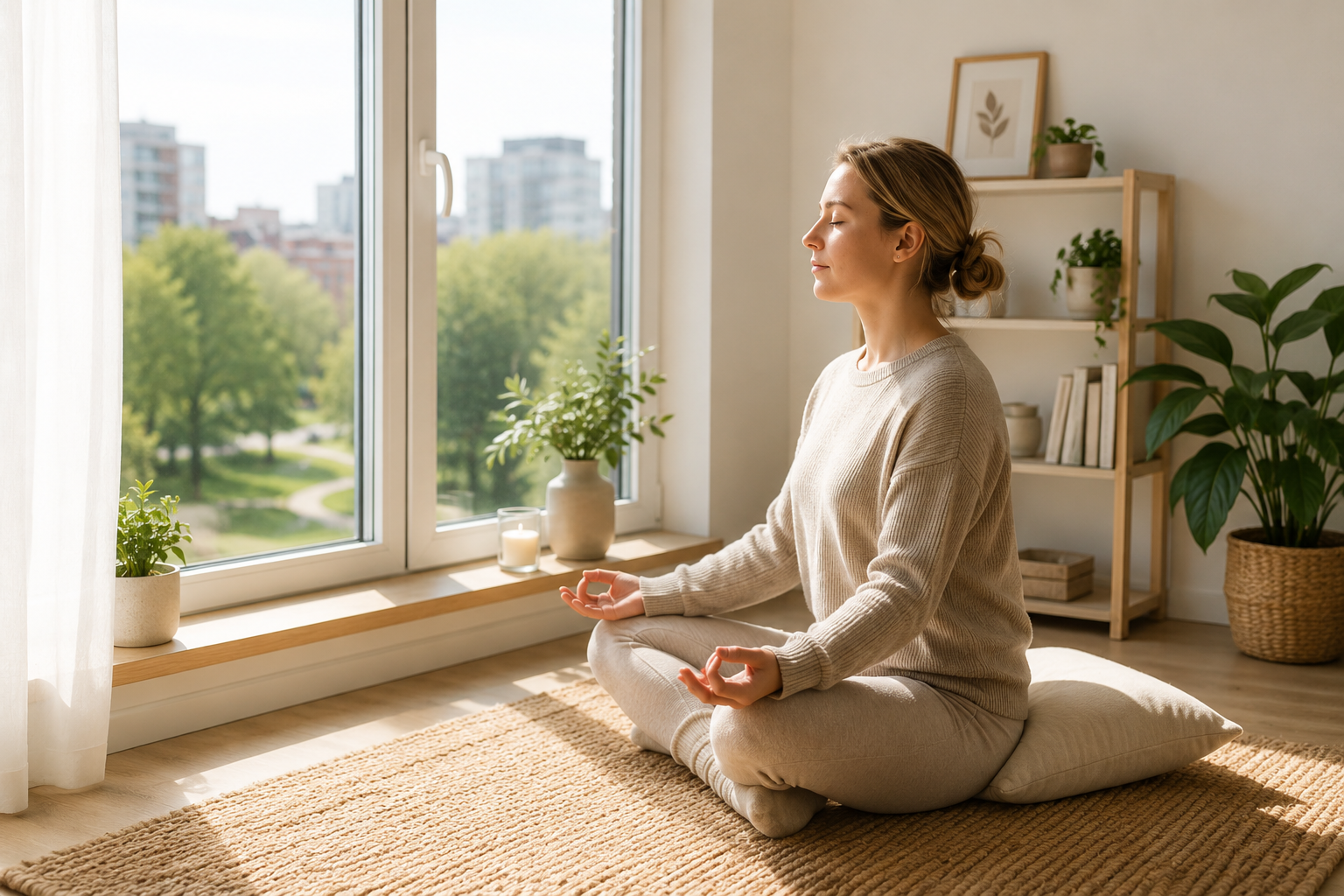
Can Meditation Really Reduce Stress?
 EnglishMasteryHub
Article Level: B1-B2
Explanation: Can meditation really reduce stress? Discover how this simple daily practice can help you relax, improve your focus, and manage life’s challenges more effectively. Learn why even a few minutes of meditation each day can have a positive impact on your mental well-being.
Commonly Used Words from the Article
1. Meditation /ˌmedɪˈteɪʃən/ (noun) : The practice of calming and focusing the mind.
Meditation helps many people relax after a busy day.
2. Stress /stres/ (noun) : Mental or emotional pressure caused by difficult situations.
Too much stress can affect your health.
3. Concentration /ˌkɒnsənˈtreɪʃən/ (noun) : The ability to focus your attention.
Good concentration makes studying easier.
4. Consistency /kənˈsɪstənsi/ (noun) : The quality of doing something regularly.
Consistency is important when learning a new skill.
5. Awareness /əˈweənəs/ (noun) : Knowledge or understanding of a situation or feeling.
Meditation increases your awareness of your thoughts and emotions.
Phrasal Verb
- Set aside /ˌset əˈsaɪd/ : To save time for a particular purpose.
She sets aside ten minutes each morning for meditation.
Idiom
- Keep your chin up /kiːp jə tʃɪn ʌp/ : To remain cheerful and hopeful during a difficult situation.
Even after failing the exam, she kept her chin up and continued studying.
Audio File of the Article
Read more: Can Meditation Really Reduce Stress?

Can Meditation Really Reduce Stress?
Stress has become a common part of modern life. Many people have busy jobs, family responsibilities, and endless tasks to complete each day. Because of this, finding simple ways to relax has become more important than ever. One method that has been attracting attention is meditation. Although some people believe it is only for experienced practitioners, meditation is a simple habit that almost anyone can try. But can meditation really reduce stress? Research and personal experience suggest that it can.
Meditation is the practice of focusing your attention on the present moment. This often involves paying attention to your breathing, repeating a calming word, or simply observing your thoughts without judging them. The purpose is not to stop thinking completely but to become more aware of your mind. By doing this regularly, many people begin to feel calmer and more in control of their emotions.
One of the main reasons meditation helps is that it encourages the body to relax. When we feel stressed, our heart rate increases, our breathing becomes faster, and our muscles become tense. During meditation, slow and steady breathing signals to the brain that the body is safe. As a result, many people notice that they feel more peaceful after just a few minutes of practice.
Scientists have also been studying meditation for many years. Their research has shown that regular meditation may improve emotional well-being and help people deal with stressful situations more effectively. Many people have been practising meditation every morning and have noticed positive changes in their mood, concentration, and sleep. Although meditation cannot remove every difficulty from life, it can change the way we respond to challenges.
Another important benefit is improved focus. Stress often fills our minds with worries about the past or the future, making it difficult to concentrate on the present. Meditation teaches us to return our attention to one thing at a time. This skill can be useful at school, at work, or even during everyday conversations. Over time, people may become more patient, make better decisions, and communicate more calmly with others.
Of course, meditation is not a magic solution. It works best when it becomes part of a healthy lifestyle that also includes enough sleep, regular exercise, and a balanced diet. Like any new skill, it requires patience and consistency. If you set aside a few minutes each day for meditation, you may gradually notice that stressful situations feel easier to manage.
In the end, meditation is not about escaping problems but about facing them with a calmer mind. Even five or ten minutes each day can make a meaningful difference. During difficult times, it is important to keep your chin up, and meditation may help you stay calm, positive, and ready to face life’s challenges.
Grammar Notes
Present Perfect Continuous
We use the Present Perfect Continuous for actions that started in the past and are still continuing, or have recently stopped but still have present results.
Structure
Subject + have/has + been + verb (-ing)
Examples from the article
- Scientists have been studying meditation for many years.
- Many people have been practising meditation every morning.
Another Example
- She has been reading about mindfulness all week.
Join Our FREE English Grammar Course and improve your grammar skills!
Five Questions Based on the Article
-
Why has meditation become popular in modern life?
-
How does meditation help the body relax?
-
What have scientists discovered about regular meditation?
-
Why can meditation improve concentration?
-
Why does the writer believe meditation should become a regular habit?
Join Our Weekly English-speaking Class and improve your speaking skills!
We’d love to hear your thoughts! Join the conversation by leaving a comment below. Sharing your insights, questions, or experiences can help you connect with others in our English learning community. It’s a great way to practice your English skills, engage with like-minded individuals, and improve together. Don’t be shy—jump in and let’s keep the discussion going!