
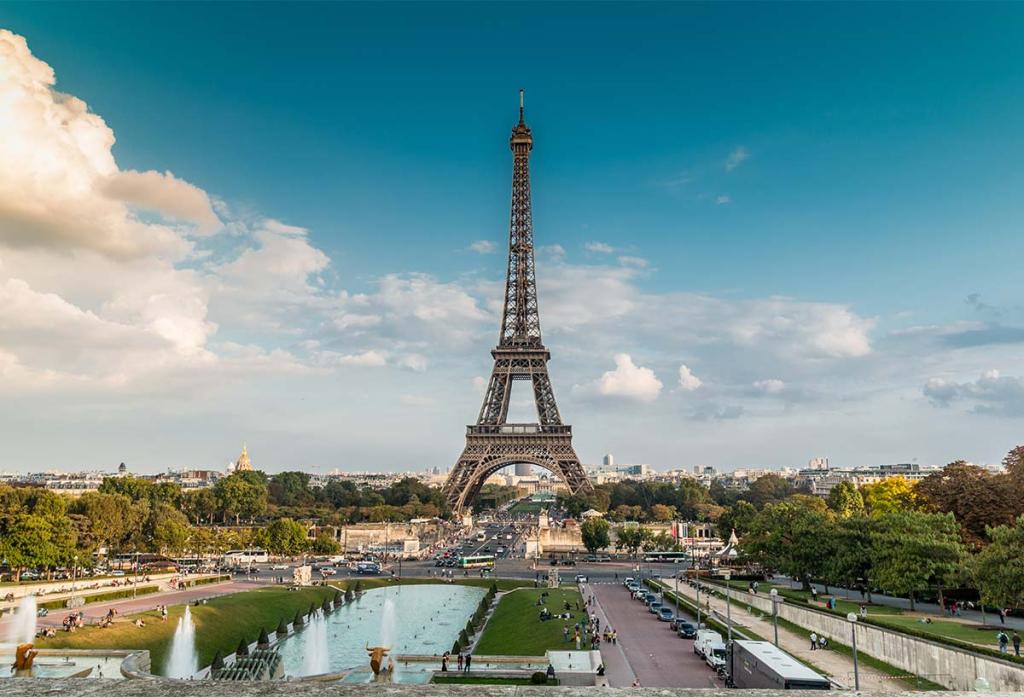
How the Eiffel Tower Became the Symbol of Paris
 EnglishMasteryHub
Article Level: B1-B2
Explanation: Discover how the Eiffel Tower went from a controversial structure to the world-famous symbol of Paris. Learn about its construction, early criticism, unexpected survival and the role it has played in French history and culture.
Commonly Used Words from the Article
1. Structure /ˈstrʌktʃə/ (noun): Something large that has been built from different parts.
The bridge is an impressive steel structure.
2. Controversial /ˌkɒntrəˈvɜːʃəl/ (adjective): Causing disagreement or strong differences of opinion.
The new building design was controversial when it was first announced.
3. Achievement /əˈtʃiːvmənt/ (noun): Something important or difficult that you succeed in doing.
Completing the project in two years was a major achievement.
4. Recognisable /ˈrekəɡnaɪzəbəl/ (adjective): Easy to identify because you have seen or experienced it before.
The building is instantly recognisable because of its unusual shape.
5. Represent /ˌreprɪˈzent/ (verb): To be a sign or symbol of something.
The monument has come to represent the history of the city.
Phrasal Verb
-
Live on /lɪv ɒn/ : To continue to exist or remain important for a long time.
Although the tradition is very old, it continues to live on today.
Idiom
- Stand the test of time /stænd ðə test əv taɪm/ : To remain successful, useful or respected for a long period.
The building’s simple design has stood the test of time.
Audio File of the Article
Read more: How the Eiffel Tower Became the Symbol of Paris

How the Eiffel Tower Became the Symbol of Paris
It is difficult to imagine Paris without the Eiffel Tower. Rising above the city, the famous iron structure appears on postcards, films and photographs around the world. Millions of people connect its shape with Paris immediately. However, the tower was not always loved, and its journey from a controversial project to an international symbol is a remarkable story.
The Eiffel Tower was built for the 1889 Exposition Universelle, a world’s fair held in Paris to celebrate the 100th anniversary of the French Revolution. The project was connected with engineer Gustave Eiffel, although engineers Maurice Koechlin and Émile Nouguier played important roles in developing the original idea. Construction began in 1887 and took just over two years. When completed, the tower stood about 300 metres high and demonstrated what modern engineering could achieve.
Not everyone was impressed. During construction, a group of well-known artists and writers publicly protested against the tower. They believed that the enormous iron structure would damage the beauty of Paris. At the time, the city was already famous for its elegant architecture and historic monuments, so such a modern structure seemed completely out of place to some people.
Despite the criticism, visitors were fascinated by the tower when it opened in 1889. It offered impressive views across Paris and quickly became one of the main attractions of the exhibition. Yet its future was still uncertain. Gustave Eiffel had been given the right to operate the tower for only 20 years, and there was no guarantee that it would remain standing afterwards.
One important development helped the tower live on. Gustave Eiffel encouraged scientists to use it for experiments, including work with wireless communication. In 1898, a radio connection was successfully made between the Eiffel Tower and the Panthéon, several kilometres away. Its usefulness for radio communication later gave Paris a practical reason to keep the structure.
Over the following decades, attitudes towards the tower changed. What had once seemed strange and unpopular gradually became familiar and admired. It appeared in photographs, paintings, advertisements and films, helping to create a powerful connection between the tower and the city itself.
The Eiffel Tower has stood the test of time. Since its completion in 1889, it has welcomed visitors from across the world and has become one of the most recognisable structures on Earth. It has also played an important role in radio and television broadcasting.
Today, the Eiffel Tower represents more than a famous tourist attraction. It is connected with the history, culture and identity of Paris. A structure that some people once wanted removed has become almost impossible to separate from the image of the city. Its story shows that people’s opinions can change dramatically — and that something controversial can eventually become a much-loved symbol.
Grammar Notes
Present Perfect
The Present Perfect is formed with:
have/has + past participle
We often use it to describe an action or development that started in the past but has a connection with the present.
Examples from the article:
The Eiffel Tower has welcomed visitors from across the world.
It has become one of the most recognisable structures on Earth.
It has also played an important role in radio and television broadcasting.
We can also use the Present Perfect to describe a change that has happened over time:
A controversial structure has become a symbol of Paris.
Compare:
The Eiffel Tower was completed in 1889.
Past Simple because we mention a finished time in the past.
The Eiffel Tower has become a symbol of Paris.
Present Perfect because the result is still true today.
Join Our FREE English Grammar Course and improve your grammar skills!
Five Questions Based on the Article
-
Why was the Eiffel Tower originally built?
-
Why did some artists and writers oppose the tower during its construction?
-
Why was the future of the Eiffel Tower uncertain after the exhibition?
-
How did radio communication help the Eiffel Tower remain standing?
-
How have people’s attitudes towards the Eiffel Tower changed since it was built?
Join Our Weekly English-speaking Class and improve your speaking skills!
We’d love to hear your thoughts! Join the conversation by leaving a comment below. Sharing your insights, questions, or experiences can help you connect with others in our English learning community. It’s a great way to practice your English skills, engage with like-minded individuals, and improve together. Don’t be shy—jump in and let’s keep the discussion going!