
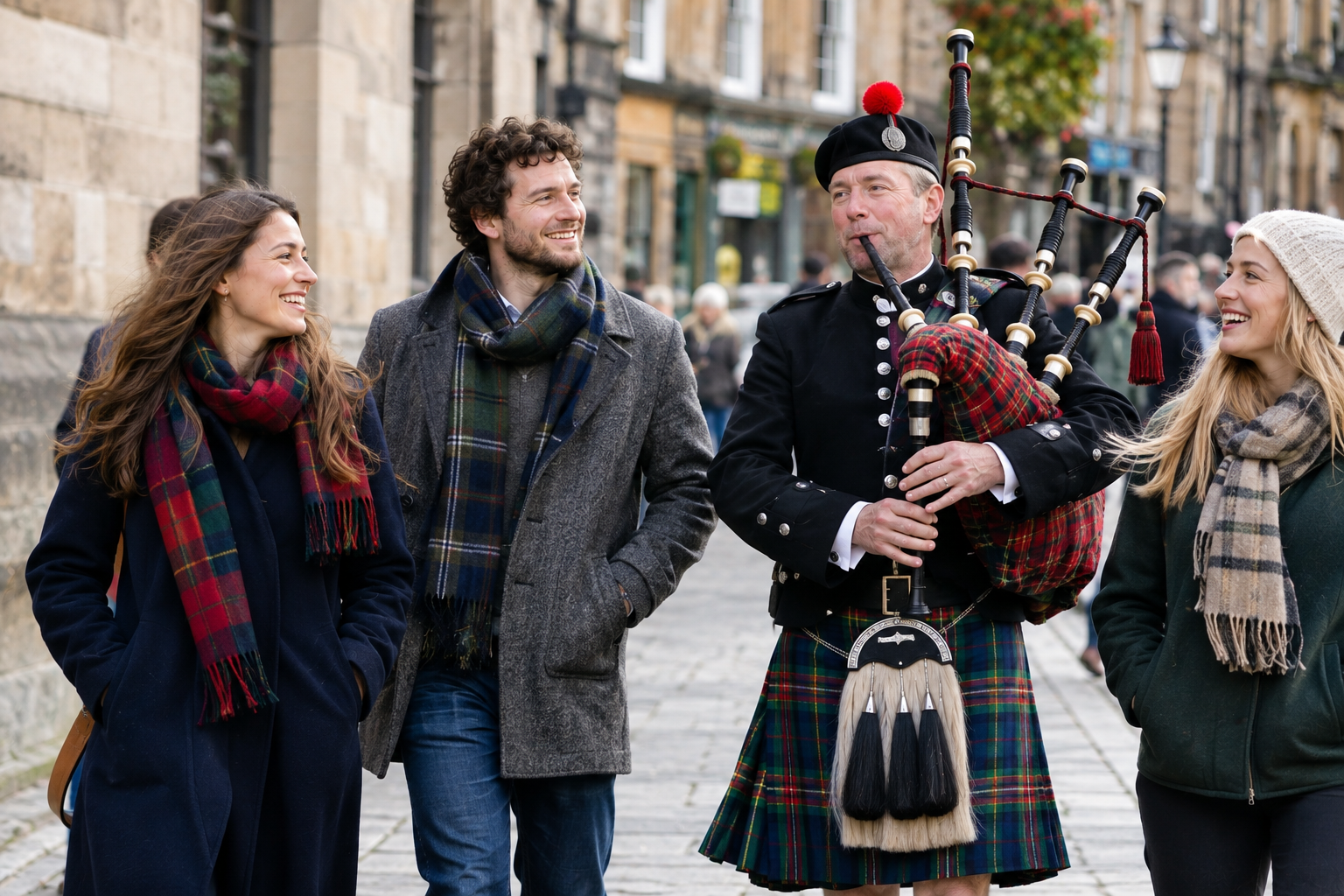
Why Do Scots Celebrate St Andrew’s Day?
 EnglishMasteryHub
Article Level: B1-B2
Explanation: Discover why Scots celebrate St Andrew’s Day on 30 November. Explore the history of Scotland’s patron saint, the meaning behind the Saltire flag, and the traditional food, music and dancing that make this celebration an important part of Scottish culture.
Commonly Used Words from the Article
1. Heritage /ˈherɪtɪdʒ/ (noun): The history, traditions and culture passed down through generations.
Scotland’s castles and traditional music are important parts of its cultural heritage.
2. Symbol /ˈsɪmbəl/ (noun): Something that represents an idea, place or quality.
The Saltire is a symbol of Scottish identity.
3. Occasion /əˈkeɪʒən/ (noun): A particular event or special time.
The festival was a wonderful occasion for the whole community.
4. Gather /ˈɡæðə/ (verb): To come together in one place, usually for a particular purpose.
People gather in the town square to enjoy traditional music.
5. Tradition /trəˈdɪʃən/ (noun): A custom or belief that has been followed for many years.
Traditional dancing is an important part of many Scottish celebrations.
Phrasal Verb
-
Join in /dʒɔɪn ˈɪn/ : To participate in an activity with other people.
Visitors are encouraged to join in the traditional Scottish dancing.
Idiom
-
Stand the test of time /stænd ðə test əv taɪm/ : To remain valuable, successful or popular over a long period.
Many Scottish customs have stood the test of time and remain popular today.
Audio File of the Article
Read more: Why Do Scots Celebrate St Andrew’s Day?
Why Do Scots Celebrate St Andrew’s Day?

Grammar Notes
Present Perfect
We use the Present Perfect to describe past experiences, changes and actions that have a connection to the present.
Structure:
Subject + have/has + past participle (V3)
Examples from the article:
-
“The flag has remained an important expression of Scottish heritage.”
-
“Scottish communities abroad have also celebrated the occasion.”
-
“St Andrew’s Day has become a chance to welcome visitors too.”
Explanation:
-
Has remained: Shows that the flag became important in the past and continues to be important today.
-
Have celebrated: Describes celebrations that have taken place in the past and remain relevant to the present.
-
Has become: Describes a change that happened over time and has a result that is still relevant today.
Remember: Use has with he, she and it, and have with I, you, we and they.
Join Our FREE English Grammar Course and improve your grammar skills!
Five Questions Based on the Article
-
Why has St Andrew become an important figure in Scottish history despite never living in Scotland?
-
What is the connection between St Andrew and Scotland’s national flag?
-
How do traditional activities help people celebrate St Andrew’s Day?
-
Why is St Andrew’s Day meaningful to Scottish communities living abroad?
-
How does the celebration connect Scotland’s past with its present?
Join Our Weekly English-speaking Class and improve your speaking skills!
We’d love to hear your thoughts! Join the conversation by leaving a comment below. Sharing your insights, questions, or experiences can help you connect with others in our English learning community. It’s a great way to practice your English skills, engage with like-minded individuals, and improve together. Don’t be shy—jump in and let’s keep the discussion going!