
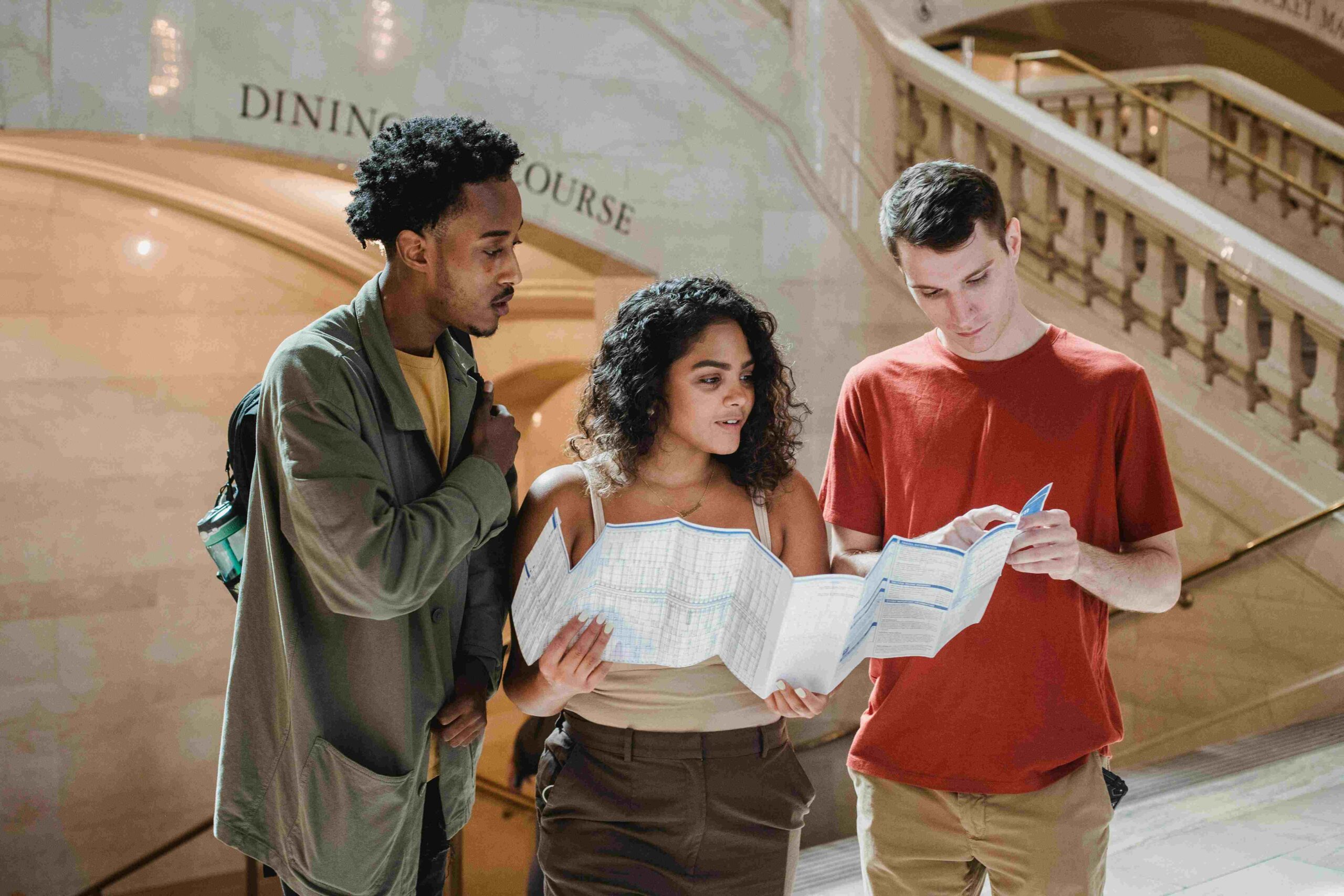
New Places, New Feelings: How Travel Changes Us
 EnglishMasteryHub
Article Level: B1-B2
Explanation: This article explains how travelling to new places can change our emotions, confidence, and perspective. It shows how different cultures, experiences, and environments help us grow, understand ourselves better, and feel more connected to the world.
Commonly Used Words from the Article
1. Perspective /pəˈspɛktɪv/ (noun): A way of thinking about something.
Travel gives us a new perspective on daily life.
2. Confident /ˈkɒnfɪd(ə)nt/ (adjective): Feeling sure of yourself.
She felt more confident after travelling alone.
3. Routine /ruːˈtiːn/ (noun): A regular way of doing things.
Travelling breaks your usual routine.
4. Reflect /rɪˈflɛkt/ (verb): To think carefully about something.
Time away helps people reflect on their choices.
5. Environment /ɪnˈvaɪərənmənt/ (noun): The surroundings or conditions where you live.
Each environment teaches us something different.
Phrasal Verb
- Come across /kʌm əˈkrɒs/ (phrasal verb): To find something by chance.
Travellers often come across new ideas during their journeys.
Idiom
-
Sink in /sɪŋk ɪn/ (idiom):When information or an experience becomes fully understood or felt.
After a few days, the beauty of the place finally sank in.
Audio File of the Article
Read more: New Places, New Feelings: How Travel Changes Us

New Places, New Feelings: How Travel Changes Us
Travelling to new places is more than simply moving from one location to another. It can become a powerful experience that helps us grow, understand ourselves better, and see the world with fresh eyes. When we step into a new environment, everything feels different — the sounds, the tastes, the people, even the air. These new sensations often bring new feelings that stay with us long after the journey ends.
One of the biggest ways travel affects us is by expanding our perspective. When we meet people from different cultures, we learn that there are many ways of living a good life. For example, visiting a quiet village may teach us the value of slowing down, while exploring a busy city may show us how energy and creativity shape daily routines. These lessons can influence how we think once we return home.
Travel can also help us build confidence. Many people feel nervous when they arrive in an unfamiliar place. However, as we successfully navigate new streets, try local foods, and communicate with strangers, we begin to trust our abilities more. These small achievements make us stronger and more independent. Over time, they remind us that we can handle challenges in everyday life too.
Another important part of travelling is the emotional change it brings. Being away from home gives us the chance to reflect on our lives. Some travellers say that the distance helps them understand what truly matters. Others feel inspired by new landscapes, traditions, and stories. Sometimes travel allows us to reconnect with ourselves, especially when we come across unexpected beauty or kindness.
Of course, travel is not only about learning. It is also about joy. Discovering a market full of colourful spices, watching a sunset at a quiet beach, or sharing a laugh with a local resident are moments that can lift our spirits. These small experiences stay in our hearts for years. They become stories we tell and memories we return to when life becomes stressful.
Travel can even change our habits. After trying different cuisines, we may start cooking new dishes at home. After observing how other communities care for nature, we may become more conscious about the environment. Sometimes, we feel motivated to follow new dreams that we did not consider before. In this way, travel encourages positive change.
In the end, every journey changes us in some way. Whether the trip is short or long, far away or close to home, the feelings we experience make us more open-minded and more connected to the world. Travel gently reminds us that life is full of opportunities — many of them waiting just beyond the next corner. This is why people say that travelling is not only about seeing new places, but about opening doors inside ourselves. It shows us that even the smallest experience can be meaningful when we are fully present and allow the world to sink in.
Grammar Notes
-
-
Present Simple: Used for general truths (e.g., “Travel changes us”).
-
Present Continuous: Not used heavily in this article, but often useful for describing ongoing actions.
-
Modal Verbs (can, may): Express possibility and ability (e.g., “Travel can influence our habits”).
-
Relative Clauses: Add extra information (e.g., “people who travel often feel inspired”).
-
Linking Words: Show connection (e.g., “however”, “in the end”, “for example”).
Quick Grammar Lesson: Relative Clauses
Relative clauses help give more information about a noun.
-
Who → people
-
Which → things
-
That → people or things
Example: “Travellers who visit new places learn more about themselves.”
-
Join Our FREE English Grammar Course and improve your grammar skills!
Five Questions Based on the Article
-
How can travelling to new cultures influence the way we see our own daily lives?
-
Why does travel often help people build confidence?
-
What emotional changes might someone experience while being away from home?
-
In what ways can travel inspire long-term lifestyle changes?
-
Why do small travel moments become memorable even after the trip ends?
Join Our Weekly English-speaking Class and improve your speaking skills!
We’d love to hear your thoughts! Join the conversation by leaving a comment below. Sharing your insights, questions, or experiences can help you connect with others in our English learning community. It’s a great way to practice your English skills, engage with like-minded individuals, and improve together. Don’t be shy—jump in and let’s keep the discussion going!