
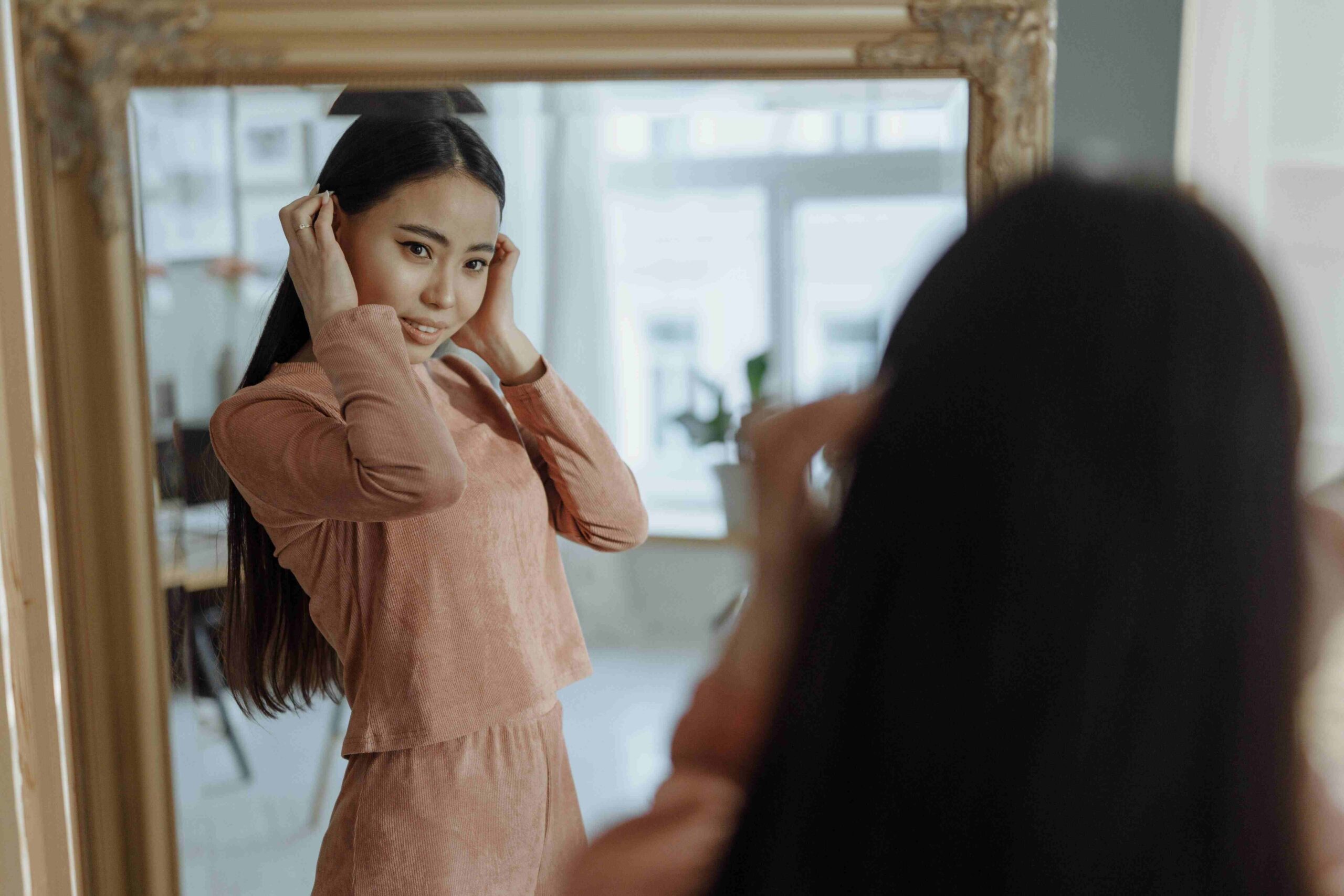
How What We Wear Shapes Our Decisions and Well-Being
 EnglishMasteryHub
Article Level: C1-C2
Explanation: The article explains how clothing influences our decisions, emotions, and well-being. It explores psychological, social, and emotional effects of what we wear, showing how mindful clothing choices can improve confidence, behaviour, and mental balance.
Commonly Used Words from the Article
1. Influence /ˈɪnflʊəns/ (noun): The power to affect decisions or behaviour.
Media has a strong influence on fashion choices.
2. Perception /pəˈsɛpʃən/ (noun): The way something is understood or interpreted.
Clothing can change others’ perception of professionalism.
3. Authenticity /ˌɔːθɛnˈtɪsɪti/ (noun): The quality of being genuine or true.
Dressing with authenticity improves self-confidence.
4. Accumulate /əˈkjuːmjʊleɪt/ (verb): To gather or increase over time.
Stress can accumulate if comfort is ignored.
5. Assertive /əˈsɜːtɪv/ (adjective): Confident and self-assured without aggression.
Formal clothing can make people feel more assertive.
Phrasal Verb
- Turn to /tɜːn tuː/ : To seek help or comfort from something.
During stressful times, people often turn to familiar clothing.
Idiom
-
Rise to the occasion/raɪz tuː ði əˈkeɪʒən/ : To perform well in response to a challenge or difficult situation.
Dressing appropriately for a job interview helps individuals rise to the occasion.
Audio File of the Article
Read more: How What We Wear Shapes Our Decisions and Well-Being

How What We Wear Shapes Our Decisions and Well-Being
What we choose to wear is often dismissed as a matter of taste or habit, yet clothing plays a far more influential role in our daily lives than we may realise. Beyond aesthetics, what we wear can shape our decisions, affect our emotional state, and even influence how others respond to us. From professional settings to personal moments, clothing quietly but powerfully affects our well-being.
Psychologists use the term enclothed cognition to describe how clothing impacts the wearer’s psychological processes. When individuals dress in a way that aligns with a specific role, they tend to behave accordingly. For example, wearing formal attire can encourage a more analytical and disciplined mindset, while casual clothing may promote relaxation and creativity. In this way, clothing does not merely reflect who we are; it actively helps shape our behaviour and decisions.
Moreover, clothing influences confidence and self-perception. When people feel comfortable and authentic in what they wear, their confidence naturally increases. This boost in self-assurance can affect decision-making, making individuals more decisive and assertive. On the other hand, uncomfortable or ill-suited clothing can be distracting, reducing focus and increasing stress. Over time, these subtle effects can accumulate and influence overall mental well-being.
Social interaction is another area where clothing plays a crucial role. First impressions are often formed within seconds, and attire is a major visual cue. People tend to associate certain styles with competence, reliability, or creativity, whether consciously or not. As a result, clothing choices can influence how seriously one is taken in professional or social situations. In high-pressure environments, such as job interviews, dressing appropriately can set the tone and help individuals rise to the occasion rather than feel out of place.
Cultural and emotional associations with clothing further deepen its impact. Certain garments may evoke memories, comfort, or a sense of belonging. For instance, traditional clothing can strengthen cultural identity, while favourite outfits can provide emotional reassurance during stressful times. When life becomes overwhelming, people often turn to familiar clothing as a form of stability, allowing them to cope more effectively.
In modern society, fashion trends and social media amplify these effects. People are constantly exposed to idealised images, which can shape expectations and self-worth. While this can be motivating, it can also lead to unhealthy comparisons. Learning to choose clothing based on personal values rather than external pressure helps maintain emotional balance and authenticity. When individuals focus on how clothing makes them feel rather than how it appears to others, their well-being improves.
Ultimately, what we wear is not a trivial choice. Clothing influences how we think, how we act, and how we are perceived. By becoming more mindful of our clothing choices, we can support our mental health, improve decision-making, and approach daily life with greater confidence. When comfort, identity, and purpose align, people are better able to rise to the occasion.
Grammar Notes
-
Complex sentences with multiple clauses
-
Passive voice (e.g., is often dismissed, are formed)
-
Abstract nouns (influence, perception, identity)
-
Cause-and-effect structures
-
Modal verbs (can, may, tend to)
Mini Lesson:
At C1–C2 level, writers often use complex sentence structures to express nuanced ideas.
Example:
When individuals dress in a way that aligns with a specific role, they tend to behave accordingly.
This structure links condition + result, allowing for precise and sophisticated explanation.
Join Our FREE English Grammar Course and improve your grammar skills!
Five Questions Based on the Article
-
How does the concept of enclothed cognition explain the relationship between clothing and behaviour?
-
In what ways can inappropriate clothing negatively affect decision-making?
-
Why are first impressions strongly influenced by attire in social settings?
-
How can emotional associations with clothing contribute to mental stability?
-
Why is it important to prioritise personal values over fashion trends?
Join Our Weekly English-speaking Class and improve your speaking skills!
We’d love to hear your thoughts! Join the conversation by leaving a comment below. Sharing your insights, questions, or experiences can help you connect with others in our English learning community. It’s a great way to practice your English skills, engage with like-minded individuals, and improve together. Don’t be shy—jump in and let’s keep the discussion going!